
Every image I make starts with a problem. I need a specific shaft of light hitting a specific texture at a specific angle, and I need it now, at 11pm on a Tuesday when no one is answering emails. Over the years I’ve built a reference library that would embarrass a small archive, but even I find myself reaching for stock. That’s the economy we’re working in. Creative professionals are producing more content than ever, with fewer hours and thinner budgets, and they need images they can license immediately. That demand doesn’t slow down.
What I hadn’t fully considered, until watching this KelbyOne tutorial from Terry White, is that the same logic works in reverse. Watch the full tutorial on YouTube. If the market is hungry and constant, then feeding it is a legitimate income strategy, not just a side hustle for photographers who couldn’t land other work. White frames contributing to stock, specifically Adobe Stock, as both a passive income engine and a portfolio door-opener, and his argument is more compelling than I expected.
The specific context for his talk is the Scott Kelby Worldwide Photo Walk, but the advice applies any time you’re already out with a camera. The question he’s really asking is: why wouldn’t you? You’re shooting anyway. Let’s work through his reasoning step by step.
Step 1: Understand the Market You’re Already Feeding
 Terry White at computer explaining stock market opportunity
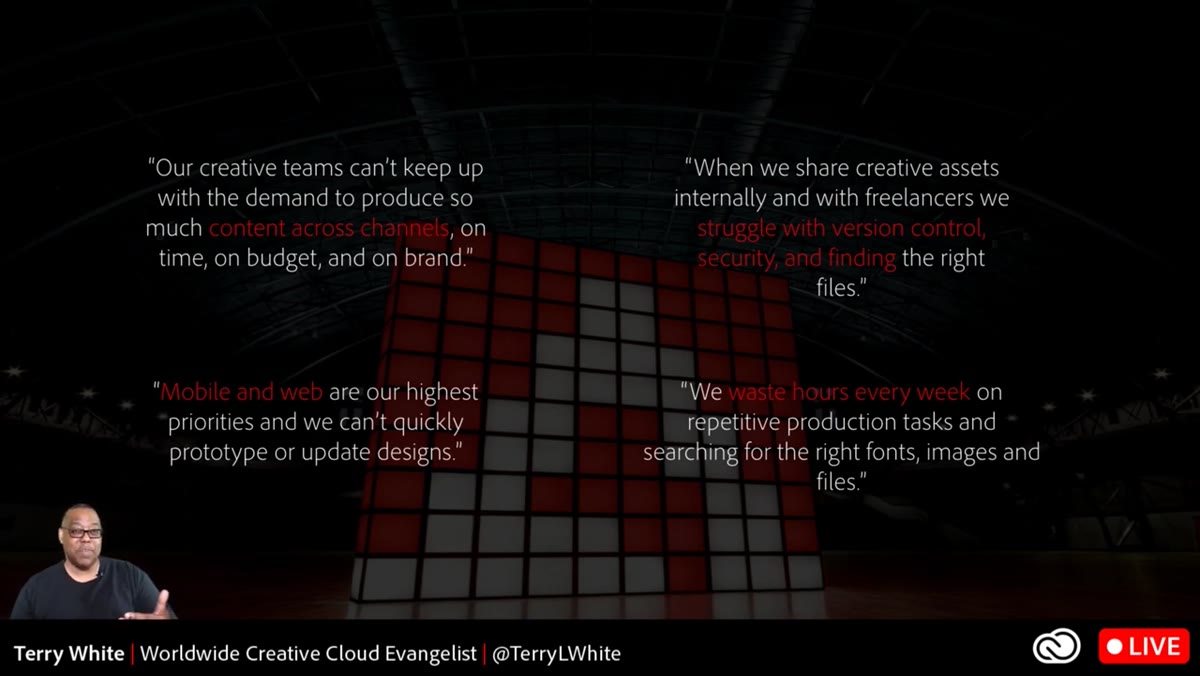
Stock content is consumed daily by marketers, bloggers, journalists, and brand teams who either can’t afford a custom shoot or don’t have the lead time to commission one. White cites a figure that should stop any photographer in their tracks: 30% of marketers are producing five or more pieces of content every single week, and all of it needs imagery. Add to that the fact that 71% of creatives are generating over ten times the assets they were even a few years ago, and the math becomes obvious. There is a structural, ongoing need for fresh photography, and it isn’t going anywhere.
Terry White at computer explaining stock market opportunity
Stock content is consumed daily by marketers, bloggers, journalists, and brand teams who either can’t afford a custom shoot or don’t have the lead time to commission one. White cites a figure that should stop any photographer in their tracks: 30% of marketers are producing five or more pieces of content every single week, and all of it needs imagery. Add to that the fact that 71% of creatives are generating over ten times the assets they were even a few years ago, and the math becomes obvious. There is a structural, ongoing need for fresh photography, and it isn’t going anywhere.
The practical takeaway here is that your images don’t have to be unique to be valuable. They have to be present. Even if a category feels saturated, a newer take on a familiar subject, shot with better light or more current styling, will find buyers. White’s point is that the stock library never stops needing to be refreshed.
Step 2: Reframe Your Existing Shoots as Dual-Purpose
 Terry White introducing the photo walk context and stock opportunity
The mental shift White is pushing for is this: instead of treating a photo walk or personal shoot as a single-purpose event, treat it as two things at once. You’re capturing what you came for, and you’re also building inventory. This doesn’t mean compromising your artistic intent. It means being slightly more deliberate about what you shoot and how you process it for two different destinations.
Terry White introducing the photo walk context and stock opportunity
The mental shift White is pushing for is this: instead of treating a photo walk or personal shoot as a single-purpose event, treat it as two things at once. You’re capturing what you came for, and you’re also building inventory. This doesn’t mean compromising your artistic intent. It means being slightly more deliberate about what you shoot and how you process it for two different destinations.
For composite artists like me, this has an added layer. I’m often shooting texture, sky plates, and environmental elements that I use as raw material in my own work. Those same assets, properly keyworded and submitted, can sell. A dramatic cloud formation I shot from a rooftop in Brooklyn for a movie poster project could just as easily become someone’s website hero image. The capture cost is zero because I was already there with my camera.
Step 3: Take Phone Shots Seriously
 Terry White describing phone photography selling on stock
One of the more useful moments in the tutorial is when White casually mentions making money from a phone shot he took while waiting in a drive-thru, a photo of his sunroof. He’s not being precious about the gear. The point is that stock buyers often need something quick, authentic, and unpolished-looking, and phone photography delivers exactly that aesthetic.
Terry White describing phone photography selling on stock
One of the more useful moments in the tutorial is when White casually mentions making money from a phone shot he took while waiting in a drive-thru, a photo of his sunroof. He’s not being precious about the gear. The point is that stock buyers often need something quick, authentic, and unpolished-looking, and phone photography delivers exactly that aesthetic.
If you’re already shooting on your phone for social media or reference, a small habit shift changes everything. Before you move on from a frame, ask whether it’s technically clean enough to pass a stock review. Sharp focus, correct exposure, no visible brand logos, and you’re most of the way there. Adobe Stock’s contributor portal will walk you through the rest.
Step 4: Use Your Portfolio as a Lead Generator, Not Just a License Source
 Terry White explaining stock leading to direct client work
White makes a point I wish someone had told me earlier in my career. A strong stock portfolio doesn’t just earn licensing fees. It functions as a public-facing body of work that clients browse before they decide to hire. He describes a scenario where a creative director finds your stock images, likes what they see, and contacts you for a custom campaign. The stock sale becomes a calling card.
Terry White explaining stock leading to direct client work
White makes a point I wish someone had told me earlier in my career. A strong stock portfolio doesn’t just earn licensing fees. It functions as a public-facing body of work that clients browse before they decide to hire. He describes a scenario where a creative director finds your stock images, likes what they see, and contacts you for a custom campaign. The stock sale becomes a calling card.
This is particularly relevant if you do commercial work of any kind. Posting consistent, high-quality images under your contributor profile builds a searchable archive with your visual signature attached to it. Someone looking for a photographer who shoots in your style has a way to find you that doesn’t require a cold email or a social media follow.
Step 5: Let Passive Income Do Work While You’re Sleeping
 Terry White describing passive income and email notifications from stock sales
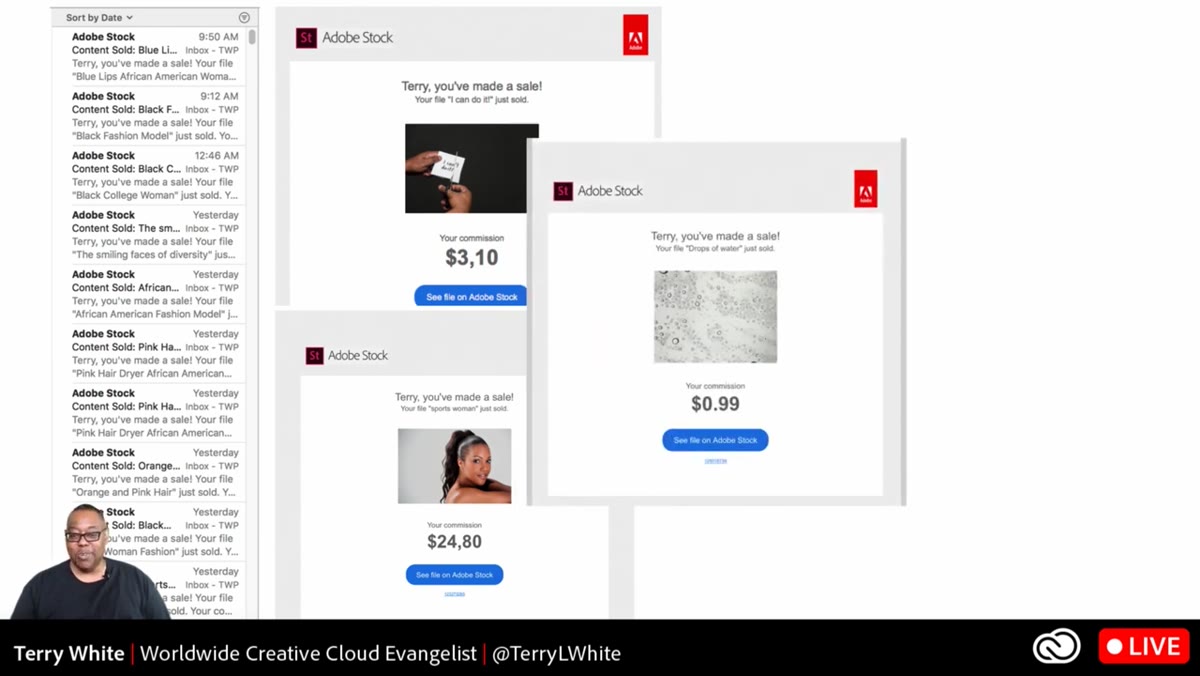
White describes waking up to email notifications showing small but real income from images he shot in his own studio or grabbed on his phone. The compounding nature of stock is the key thing to understand here. An image you upload today can sell next week, next year, or five years from now. You do the work once, and the license model does the rest.
Terry White describing passive income and email notifications from stock sales
White describes waking up to email notifications showing small but real income from images he shot in his own studio or grabbed on his phone. The compounding nature of stock is the key thing to understand here. An image you upload today can sell next week, next year, or five years from now. You do the work once, and the license model does the rest.
He distinguishes between stock as an additional revenue stream and stock as a primary one, depending on how seriously you pursue it. For most photographers, especially those who already have editorial or commercial clients, stock fits naturally as the income that runs in the background. It won’t replace a major assignment, but it also doesn’t require you to be actively working to generate it.
What I’d Add From My Own Work
Before I submit anything to a stock platform, I ask whether the image can stand on its own outside of the context I shot it in. This is the composite artist habit talking. Every element I pull into Photoshop has to work across multiple scenarios, not just the one I’m building. Apply that same logic to stock photography. An image that only works in one narrow context will sell once, maybe. An image with strong light, clean separation, and a neutral or versatile background will sell across categories and industries indefinitely.
I also keep my submissions organized separately from my editorial work. Stock files go through a stricter technical checklist before they leave my hard drive: noise levels, sharpness at 100%, accurate metadata, model releases if any faces are visible. The upfront discipline saves rejections and keeps your contributor rating clean.
The single most important idea Terry White puts forward is also the simplest: you’re already going to be out there shooting, so you might as well make your images work twice. Passive income isn’t a fantasy. It’s a system, and stock photography is one of the few places in this industry where a photographer can build one without a huge additional investment of time or money.
Watch the full tutorial on YouTube to hear White walk through the specifics in his own words. It’s a short watch and a genuinely useful one.
Comments (4)
Simple but effective. Sometimes that's all you need.
Tried this technique this morning. Game changer for real.
I tried this on a client project yesterday and the results were way better than expected.
The tip about stock photography is passive i was the missing piece for me. Thank you.
Leave a Comment